

 DA
DA  DE
DE  SV_SE
SV_SE  ES
ES 


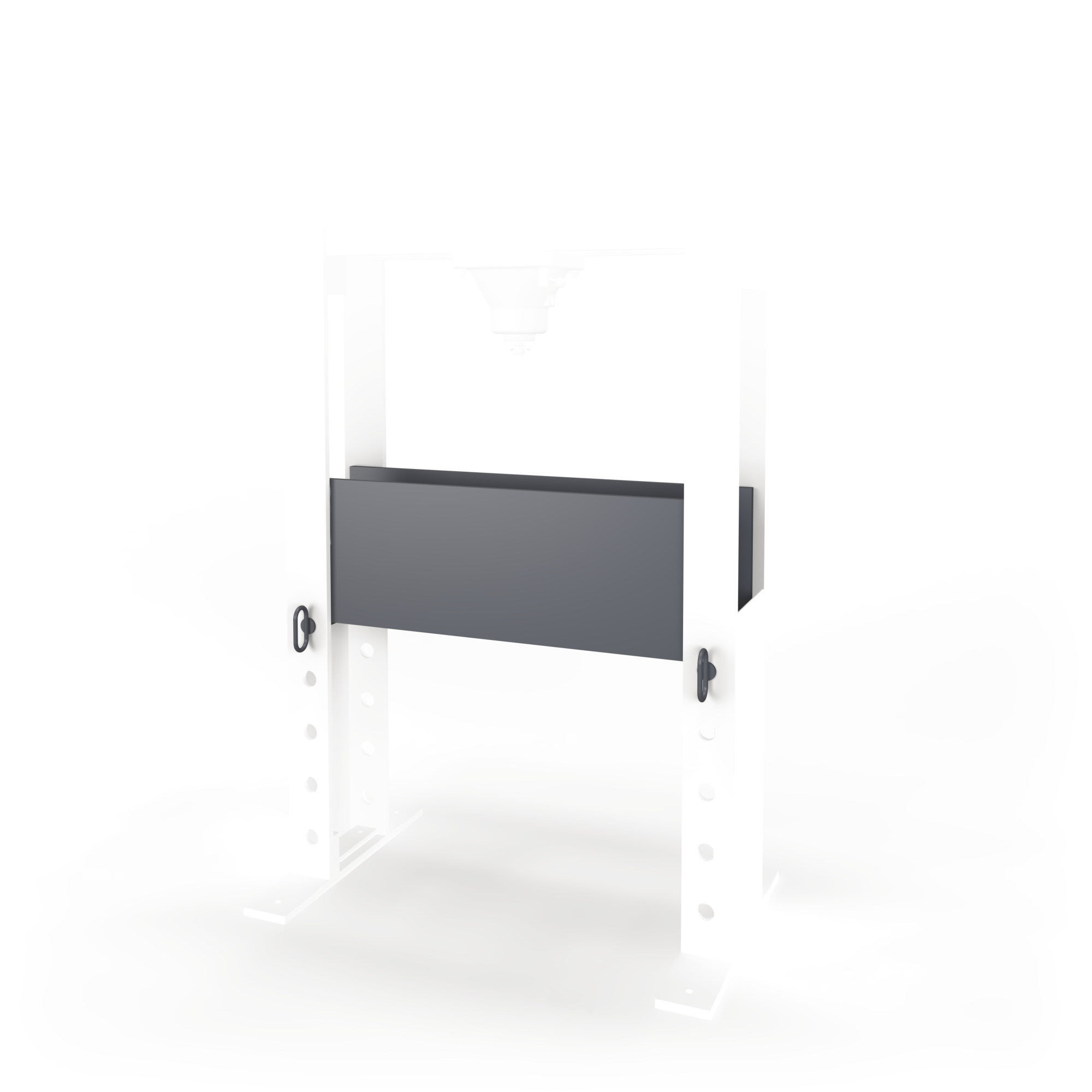


These plates are used to:
- Create larger work surfaces
- Support workpieces that are not flat
- Lift, center, or position workpieces under the press
The plates are made from high-strength steel, allowing them to withstand extreme loads without deforming.

Once the workshop press is in place on the floor, the real work begins. Because it is not only the press itself that determines how precisely, safely, and efficiently you can carry out your tasks. It is just as much about the accessories you combine it with. The right tools and accessories are essential to getting the exact press setup needed to handle the most demanding tasks.
The accessories are developed as a natural extension of the machine’s quality, giving you a flexible system that can be adapted to everything from assembly and straightening to heavy industry and prototyping. Would you like a technical overview of the press’s construction and function? Then read our pillar article “Workshop Presses – A Practical Guide to Selection, Use, and Function.”
A workshop press, in its basic form, is a powerhouse designed to transfer tons of pressure in a controlled manner. But without the right tools and accessories, even a robust press cannot operate safely or efficiently. The right tools and accessories ensure three key things:
Precision: The right tools and accessories help ensure that your workshop press distributes pressure evenly. This prevents the press from applying force unevenly, which could damage workpieces or cause deformation potentially leading to damaged equipment or unnecessary downtime.
Safety: When a press operates with 20–200 tons of force, even a small mistake can have serious consequences. Safety is therefore not a formality but a necessity. Proper accessories such as support blocks, V-blocks, guards, and light curtains help minimize daily risks.
Flexibility: Different tasks require different tools and accessories. With the right setup, a single press can handle a wide variety of tasks, covering many more production needs within the same operation.
First and foremost, it is important to determine the task the workshop press is meant to perform. For simple and standardized tasks, the press alone is often sufficient, but for more complex operations, tools and accessories become crucial for precision. At STENHØJ HYDRAULIK, tools and accessories are designed for repeated use without losing accuracy.
A set of pins with different diameters and lengths can be used, for example, to press bearings in and out, adjust shafts and bushings, loosen stuck pins, and prevent uneven loading. Pins made of hardened steel retain their shape even after many cycles, which is essential in industrial tasks where repeated stress could otherwise deform cheaper pins and damage both workpieces and the press.
To get the most out of a workshop press, it is important to invest in the right tools and accessories. That’s why STENHØJ HYDRAULIK always recommends seeking guidance to create a solution tailored to your specific tasks. Keep in mind that you cannot increase the press’s maximum force but you can always work with less. If you anticipate higher loads in the future, it may be worth choosing a press with greater pressure capacity from the start.
Adapters are used to transfer the force from the press ram to workpieces of varying shapes and sizes.
They are ideal for:
Adapters expand the press’s range of applications without compromising strength or stability.
These plates are used to:
The plates are made from high-strength steel, allowing them to withstand extreme loads without deforming.
When working with round workpieces shafts, pipes, bolts, or pins V-blocks are essential. They hold the workpiece securely and ensure that the force is applied precisely. Without V-blocks, even small inaccuracies can lead to damage, both to the press and to the parts you are working on.
Regardless of the type of workshop press you are using, safety is paramount. At STENHØJ HYDRAULIK, all safety solutions comply with current legislation and are tailored to the specific function and application. Even though the press ram moves slowly, enormous forces are at play, and a single mistake can have serious consequences. That’s why safety is not an added feature, but an integral part of both the machine and its accessories. The goal is for safety to be clear and effective without interfering with daily operations and only noticed when something would otherwise have gone wrong.
The H-frame press features a stable and robust frame, making it ideal for high-force tasks and larger workspaces.
For this type of press, the following accessories are particularly relevant:


The C-frame press has an open frame with access from multiple sides, providing great flexibility, especially for assembly, maintenance, and smaller workpieces.
Relevant tools and accessories for C-presses include:
Although the press frame is the most visible part, it is often the accessories that make it truly functional in daily use. The right tools provide precision for pressing in and out, enable accurate bending, ensure stable repeatable production, and enhance safety with options such as PLC control, guards, and foot operation. At STENHØJ HYDRAULIK, the accessories are modular and can be configured according to tasks and press type, making the press a precise and safe tool in the workshop.
Many focus first on the press’s frame and capacity, but it is often the accessories that make the press a precise and efficient tool in daily use.
It is precisely this combination of press and accessories that enables versatile, safe, and highly accurate work whether the task is heavy, precision-demanding, or series-based.
To ensure your press always performs optimally, it is important to choose tools and accessories that match both the press’s capacity and your tasks.
At STENHØJ HYDRAULIK, you receive guidance based on over 100 years of experience with hydraulic solutions. If you want a deeper understanding of the press’s technical function, read our pillar article “Workshop Presses – A Practical Guide to Selection, Use, and Function.” It provides a complete technical overview of types, functionality, hydraulics, and construction.